Every Interview that is made ALWAYS has a purpous. There are 4 main purpouses, Research, Understanding, Inform, Interpretive, Emotional.
Research interviews are made so that the the interviewer can get more information about a topic or a person. This is also known as investigating because the interviewer is finding out information they didnt already know.
Understanding interviews are very similar. These are made so that the interviewer can help the audience get a better understanding of a topic, they would use open questions to get as much information as they can.
Inform interviews are interviews that contain alot of information and made to inform the public about a topic or a subject that they might find interesting.
Emotional interviews are usually very soft interviews which is light-hearted news. They are usually made when a death has occured or something sad has happened.
To create a good interview, the interviewer will have to have good communication skills. This is one of the most vital aspects to a successful interview as the interviewee will want the full attention of the interviewer on them and nothing else.
Building a rapport:
Building a rapport is essential to a good interview. The interviewer should straight away attempt to create a good relationship with the interviewee so that they can get the most factual information out of them to make the interview a successful one. If they make a bad impression on the interviewee, this could end up with the interviewee been very stubborn and shy about things, especially if the interviewer goes into detail about subjects that they are very sensitive on. Active Listening:
Active listening is also a very important aspect of communication skills as it is often used in a successful interview. Listening carefully to the interviewee's answer is vital as it may result in the interviewer adjusting there questions due to the interviewee saying something intriguing which the interviewer can pick up on and therefore ask more variation in questions. Bad active listening may result in a major confession or story been missed by the interviewer so therefore may lose them a lot of reputation. Body Language
Body Language is the final essential part of good communication skills. The interviewer must portray them self in a good way and make the interviewee feel comfortable or the interview will just fail completely. For example, if the interviewer doesn't come across as confident to the interviewee, the interviewee will therefore feel very unsure and lost as they don't carry the confidence to reply to the interviewer.
A very good example of an interview with bad communication skills is the Russell Harty interview with Grace Jones. Harty turns his back to kelly which immediately riles her and she attacks him. Just turning his back to kelly is proof of Russell Harty's lack of skills because the interviewee should always stay as the centre of attention.
Question types There are many types of questions you can ask in an interview, Open, Closed, Single and multiple are just four of them. An open question is a question where the interviewer is attempting to get a descriptive answer out of the interviewee. The interviewer will often achieve this by using the 5 W's ( who, what, why, where, when ) and How. A closed question is often used in survey's or small interviews like red carpet interviews.They are often used to get short one worded answers like yes and no. Single questions is simply just one question. They are often used in vox pops's to get information of a variation of people. Multiple questions are questions that can be used in extensive interviews or questionnaires. They can be used to get a lot of information out of one person or an opinion. They're are a variation of questions asks in the interview below with actor Warwick Davis. The main types of questions asked are closed questions as it is a red carpet interview and usually people don't have a lot of time to waste.
A good interview always depends on the style of the interview. If the style is hard news, tough questions will be asked. Hard news is often breaking news or anything to do with politics or stories that the public will want to here about. a good example of hard news is the Election debate in 2011 between Nick Clegg, David Cameron and Gordon brown. Hard news is on occasions used with a live public audience which adds more emphasis to it because it shows that a lot of people are very interested in the topic which is been discussed.
If the style is light-hearted news, the questions will tend to be very soft and the interviewer will be held in an alot more calmer environment. Light-hearted news is often used when a celebrity has a child or when there is news that the public aren't to fussed about but some show an interest in. Jonathan Ross interviewing David Beckham is a very good example of Light-hearted news because it is a very calm interview which covers many aspects but in a light-hearted way.
The structuring of an interview is in some words the interviewers 'agenda'. The way a good interview should be structured is:
Introduction Question
Developmental Questions
Confidence building
Key Questions
Soundbites
Summary
Wind-up
This type of structure in an interview will always get the best answers out of the interviewee.
Journalistic context consists of a variation of interviews. These interviews include Print, Television, Audio, Online, News, and Sport. Interviews are all done so that interviewer can get interesting information for the public who are interested in the topic of the interview. Print
Print interviews are mainly done for newspaper or magazines. Print means that the interview is written and can be used in any type of print press. Also, print can be used for a television or radio interview.
Television
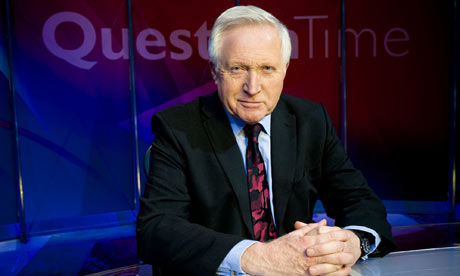
Television interviews are always done for a T.V channel or a broadcasting network. The main type of television interviews will appear on chat shows like The Jonathan Ross Show or Question Time. Television interviews are also very versatile and can be used for print or audio.
Audio
Audio interviews are always made for the Radio Network. Any type of topic may be discussed on Radio but it will always be checked over by the editor before broadcast. Audio interviews can also be used for print.
Online
Online Interviews are the most modern type of interviews due to the rise of the internet in the past 3 decades. They are very similar to print interviews, but instead of being published in newspapers or magazines, they are published on websites.
There are also a number of interviews that can be made using these.
Vox Pops
Vox pops are small pieces of audio which are often a collection of very short questions with very short answers which are answered by the public. They would be mainly used on radio and online These are mainly used to get various opinions on hot topics. Vox Pops are mainly used on radio as short 5 second clips, although they can be used on T.V but they will tend to be alot longer than 5 seconds and will be classed as a short interview.
Editorial interviews
Editorial interviews are the interviews in which are made by the ditor. Every interview has to be checked over by the editor anyway to make it to the highest standard.
Red Carpet
Red Carpet interviews are usually made at big media events or awards evenings which are well known in the media industry. The thing which is different about them is that they can be used in any type of interview. They are often used in print for magazines but they are also seen on television. A good example of a red carpet interview is the Christina Aguilera interview at the Golden Globes in 2011. This interview is originally prepared for television, but it can easily be used in audio, print and online.
T.V Show interviews
Reality T.V show interviews are mainly produced for television, but they can be translated or referred into print. They always have a presenter, who is also the interviewer. They can be shown live but they are usually recorded a few days before it is due to air so that the editors have time to edit out the things they think aren't important for the show. One of the best T.V show interviewers in the U.K is Jonathan Ross, here he is interviewing Steve Coogan, but in the character of Alan Partridge.